Growing Up Near What Was Once a Human Zoo
Growing Up Near What Was Once a Human Zoo
I’m Nadia Koch, the Digital Marketing Coordinator at Vandu Languages. Since starting my role, my work has involved researching languages serviced by the organisation. During my research, I delved into the historical origins of and changes to language and cultures. I soon realised, many of the stories which resulted in modern sociocultural structures go untold. So, I decided to write about a particular instance of cultural history, which had a monumental impact on me.
Growing up in Tervuren, Belgium, the gardens of the Royal Museum for Central Africa were a familiar part of my childhood. My home and school were located right at it’s outskirts. I remember running cross country during my Physical Education classes at the park and hanging out with friends after school. The gardens were a large and peaceful setting, which allowed me to grow up surrounded by greenery and birds. It was only later that I learned it was connected to one of the most disturbing examples of Belgian colonisation and one of the most shocking human zoo exhibitions ever staged in Europe.
My experience is not unique. For centuries, people who grew up in Belgium received little education about the realities of colonisation in the Congo. While they learned about King Leopold II and Belgium's overseas empire, the focus was often placed on development, infrastructure and so-called civilisation. In recent years, the curriculum has been standardised to address the violence, exploitation and racism that accompanied colonial rule. However, the changes have been recent and slow, meaning many Belgians today remain unaware that a human zoo once existed in Tervuren and that hundreds of Congolese people were displayed there as part of a colonial spectacle.
Today, the gardens of the Royal Museum for Central Africa stand as both a beautiful public space and a reminder of a history that deserves far greater recognition.
The Human Zoo
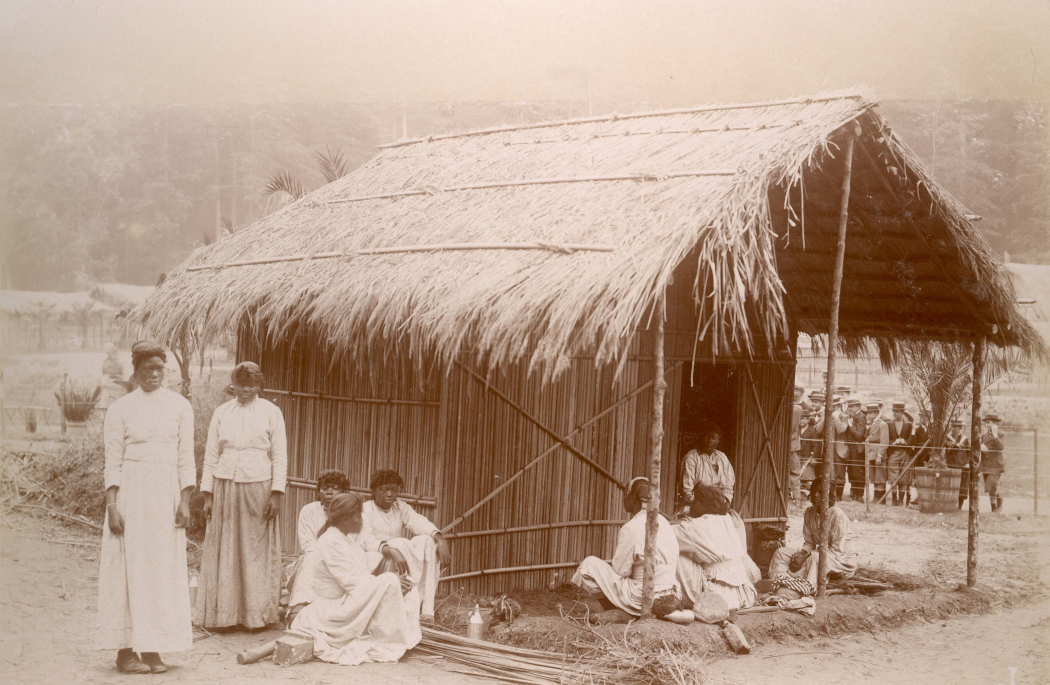
In 1897, King Leopold II organised the International Exposition in Brussels and Tervuren. The event was designed to showcase the Congo Free State, which at the time was the personal possession of the Belgian king. To attract visitors and promote support for colonisation, organisers transported 267 Congolese men, women and children to Belgium.
These individuals were placed in reconstructed villages within the grounds that are now associated with the Royal Museum for Central Africa. Visitors observed them as living exhibits. Fences separated the Congolese people from the crowds, reducing human beings to objects and reinforcing racist ideas that were widespread throughout Europe at the time.
The exhibition attracted large audiences. For many visitors, it appeared to confirm the colonial narrative that African societies were primitive and in need of European guidance. The human zoo was not intended to educate the public about Congolese cultures. Instead, it was designed to justify colonisation and strengthen support for Belgium's presence in Central Africa.
The unfamiliar climate and poor living conditions contributed to the deaths of 7 Congolese individuals from pneumonia and influenza. Their deaths act as a reminder of the ruthless exploitation by the system, that placed spectacle above human dignity.
The Creation of the Colonial Narrative
The human zoo did not exist in isolation. It formed part of a broader effort to promote Belgian colonisation in the Congo. During this period, King Leopold II sought international support for his colonial project while profiting enormously from the extraction of resources such as rubber and ivory.
The colonial administration relied heavily on propaganda. Exhibitions, publications and public events presented the Congo as a place waiting to be modernised by Europeans.
Historical research has since documented widespread violence during Leopold's rule. Forced labour, brutal punishments and economic exploitation became central features of colonial administration. Yet these realities rarely appeared in public presentations of the empire.
The Role of Education
One of the most troubling aspects of this history is not only what happened but how little many Belgians learned about it. For decades, education in Belgium provided a limited and often sanitised account of colonisation.
As a child growing up in Belgium, I do not recall learning about the human zoo in Tervuren. I do not remember detailed discussions about the violence associated with colonisation or the suffering experienced by Congolese communities under colonial rule. Instead, the subject often appeared distant, simplified and detached from its human consequences.
Omitted from classrooms, people grow up without the knowledge needed to understand their society's past. Importantly, public spaces become disconnected from the events that shaped them.
Education plays a powerful role in shaping collective memory. What is included in textbooks influences how societies understand themselves. Equally important is what is excluded. The limited treatment of colonisation in Belgian education contributed to a culture in which many people remained unaware of significant historical injustices.
The Gardens Today
Today, visitors can walk through the gardens surrounding the Royal Museum for Central Africa without immediately recognising their historical significance. The landscape is attractive and welcoming. People travel some distance to picnic there with their families, go on jogs and walk their dogs.
Yet beneath it all lies a complex history. The gardens are not simply decorative spaces. They were once the site of a human zoo that played a role in promoting colonisation and racial hierarchy. The islands in the centre of the lake, where the mock villages were set up, are still present and in view for all to see.
Many countries have begun reassessing historical sites connected to colonialism. Rather than removing difficult histories, some institutions have chosen to provide greater context through exhibitions, memorials and educational programmes. These approaches acknowledge that public spaces can carry multiple meanings.
Improving education about colonisation is not about assigning guilt to present generations. It is about understanding how historical events continue to shape contemporary society.
Conclusion
For those of us who grew up in Belgium, discovering the truth about the human zoo in Tervuren can be a profoundly unsettling experience. It challenges long-held assumptions and raises questions about what we were taught and what we were not taught. Yet this discomfort is an important part of learning.
Finding out about the dark past of a place so familiar and close to me, made me reassess my understanding of colonisation. It led me to enrol in colonial history courses at University in the UK, and later to enrol in postcolonialism classes when I studied in Canada. Finally, I got a scholarship at the University of Sussex for Media Practice for Development and Social Change, where I took a module on Demythologising and Decolonising.
However, unfortunately, for those who do not actively seek information on colonialism, will not have it handed to them. Better education across schools is essential to help challenge myths that continue to influence public understanding. It can encourage critical thinking about how historical narratives are created and whose voices are included or excluded. And critically, it provides space for colonised perspectives that have often been marginalised.